
There is something so beautiful about a piano. How a master can sit and make it sing to the angels for hours on end. How the soul of a person can be deposited onto ivory keys and broadcast into the air for thousands to hear. What makes a piano grand is that there is order amongst the beauty. That each note is specific and each chord is planned. To grasp how easy it is to make a piano ugly, merely let a child sit at the bench and bang on the keys. Order becomes chaos and music becomes noise. We find structure, not disorder, pretty and praiseworthy. We marvel at the pianist that performs flawlessly, every note in rhythm and in tune. We frequently view life that way. We even routinely view people that way.
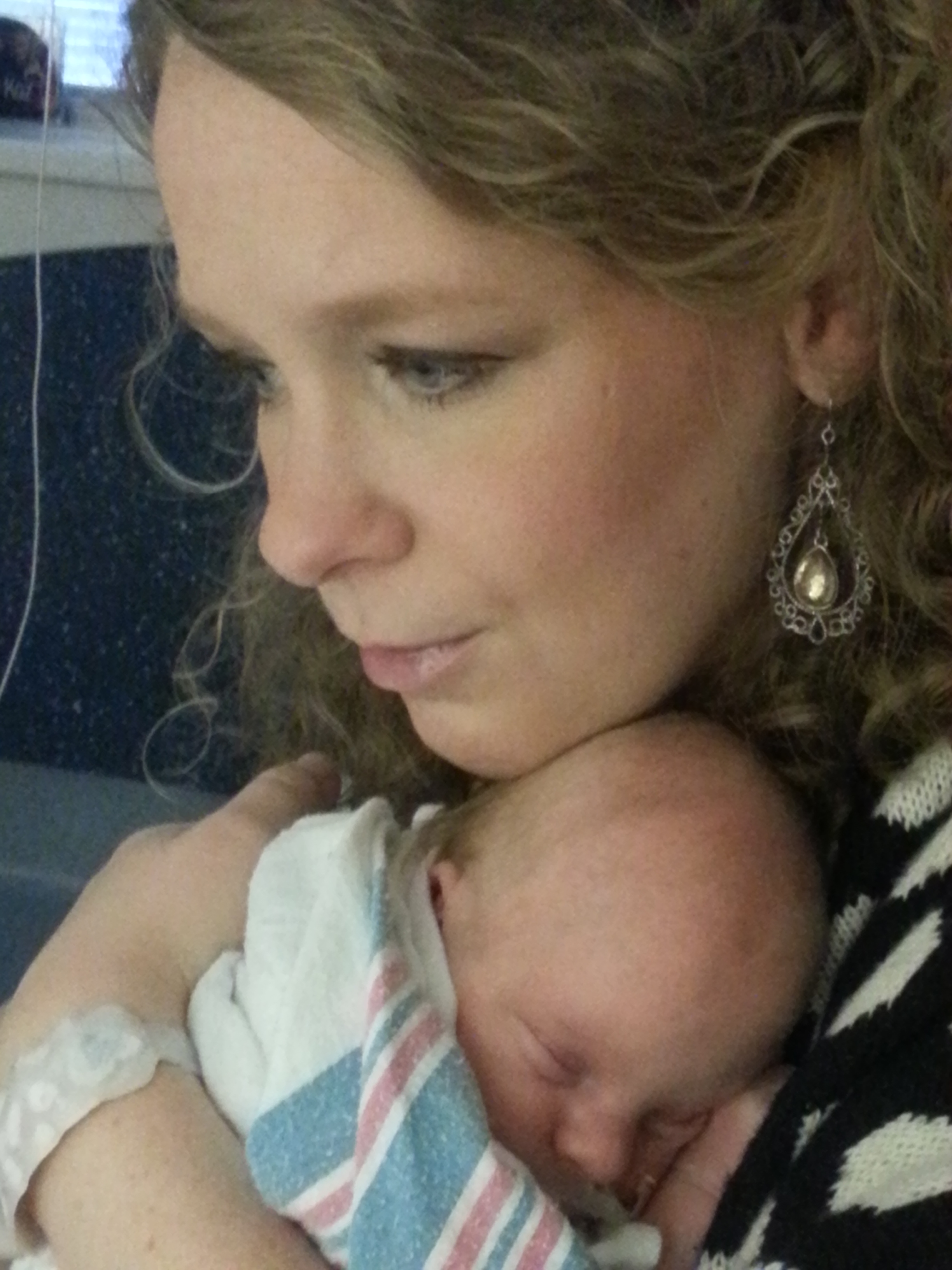
My son was born with Rubinstein-Taybi Syndrome, RTS for short. Rubinstein-Taybi is a genetic defect that mutates and stunts the genetic makeup of a person creating a unique physical appearance, abnormalities in anatomy, and developmental delays. In short, Little Brian is different. Different…even the word itself carries emotional ties to fear and uneasiness. No one really knows how it is caused or why it is caused. It seems to just happen. 1 out of 300,000 babies are born with it.[1] To put that into perspective, the odds of an adult having to visit the ER due to an injury from a pogo stick are 1 in 115,300.[2] How many times have you even BEEN on a pogo stick let alone fallen off one? Exactly. Slim to none. You are three times more likely to have this happen:
Then to be born with RTS. Brian is special. Unique. Different.
The questions come almost immediately with the diagnosis. Why was he born this way? Why couldn’t he be normal? Why did this horrible thing happen to my son? As a Christian, I know the Good God is in control, but you still wonder. Why would this happen to me? To my precious son? And at the heart of all of this is the unspoken assumption that different, unique, and special are really no more than another way of phrasing broken, damaged, and deformed. As I dug deeper into my heart, I came to find that I viewed my beautiful son as incomplete. I looked at him as a “normal” child that had been cursed. That RTS was not who he really was, but a cancer that had infected him. I had to confront the fact that I, like many others, viewed people as beautiful or ugly the same way I judged music. Does it have order and structure? Is it recognizable and familiar to me? Is it easy to digest or jarring? Is it flawless, or is it broken?
Post-WWII Germany was a broken and forsaken place. The world watched as the men that had led the Holocaust were tried and rightly condemned in Nuremberg. Europe had little pity on the nation that had for years destroyed, massacred, and scorched the earth. For many Germans though, home was also destroyed. Germany had been relentlessly bombed during the last years of the war and scores of German families found themselves homeless, jobless and fatherless after the war. Still, it is hard to feel sympathy for the bully. One lady did. Corrie Ten Boom was a Dutch Christian whose family had been arrested and sent to concentration camps for helping and hiding Jews in their home. She had watched most of her family die in custody, one after the one, most painfully her sister Betsie who had wasted away to nothing while the two ladies languished in Ravensbruck, a notorious death house for women. For years she endured shame, pain, and torture at the hands of the German people. She lived under the smoke of the crematorium which burned thousands of bodies each year. She was released on a clerical mistake just before the war’s end and went on to live many more years proclaiming the joy of Christ that reaches even into the pits of Ravensbruck.
After the war had ended, Corrie Ten Boom went back to Germany and began to transform concentration camps into refuge houses. What had been created for death become a pathway to a new life. What had symbolized the end of hope was now the place for broken people to try and start to dream again. She tells of a time when at the refuge house in Darmstadt she spied an elderly woman huddled in the corner,
She was obviously new to the camp. She had been put in the big room along with three other families and told she could set up housekeeping in the corner. There she crouched, like a whipped child, her faded, worn dress pulled tightly around her frail, wasted body. I could sense she was distressed by the bedlam of all the crying children, but most of all defeated by life itself.
I went to her, sat beside her on the floor, and asked who she was. I learned she had been a professor of music at Dresden Conservatory before the war. Now she had nothing. I asked her to tell me about her life…she told me that a minister in a nearby town had given her permission to play his piano…but the minister’s home was miles away…it all seemed hopeless.
“You were a professor of piano?” I asked excitedly. “I am a great lover of Germany’s master musician, Johann Sebastian Bach.” For an instant her eyes lighted up. “Would you care to accompany me to the minister’s home?” she asked with great dignity. “I would be most happy to play for you.”…She seated herself at the battered piano. I looked at the instrument. Even though it had been saved from the bombing it had not been protected from the rain. The strings were exposed through the warped frame and I could see they were rusted. Some were broken and curled around the others. The pedals had long been broken off and the keyboard was almost entirely without ivory. If any of the notes played it would be a miracle.
Looking up the old woman said, “What would you like me to play?” Silently I prayed knowing that failure at this moment would crush her forever. Then, to my amazement, I heard myself saying, “Would you please play the ‘Chromatic Phantasy’ of Bach?”
I was aghast. Why had I picked one of the most difficult of all piano pieces for this old woman to play on such a ruined instrument? Yet the moment I said it, I saw a light flicker behind her eyes and a slight, knowing smile played across her tired face. She nodded, and with great finesse, put her fingers on the broken keyboard.
I could hardly believe my ears. From that damp, battered old piano flowed the beautiful music of Bach as her skilled fingers raced up and down the broken, chipped keys. Tears came to my eyes and ran down my cheeks…[3]
My son is a broken jar to the masses. Even in my own eyes I viewed him this way for a time. But I have come to find a different reality. That he is special and perfectly created. He is a battered piano; bruised, rusted, and essentially useless in the eyes of the passing world. But I am beginning to understand that in the hands of the Master Musician, he can be used to make glorious music. He is a mistake and a tragedy in the eyes of many. A sad reminder of what could have been, what should have been a “normal” boy. But he is a precious present to me. A rare gift whose “broken” parts make the song of his life that much sweeter.
To Be Continued…
[1] http://rubinstein-taybi.com/medical-7/book-for-families/
[2] https://allthingsmundane.wordpress.com/2010/02/23/wow-what-are-the-odds-of-that-the-chances-of-random-things/
[3] Tramp For The Lord, Corrie Ten Boom. Jove Books, New York 1974. (Pgs 46-7)

 bglenney
Well said Brian. You have an awesome ability to share your heart. Thank you for sharing about your son that God created and gave as a gift to you and your wife. Psalms 139
LikeLike
Enjoyed this, everything is according to God’s plan, stay true! You are a inspiration!! Your grandmother is my aunt!
LikeLike
God CHOSE you to be his daddy. What a perfect family. Thank you for sharing.
LikeLike